Quorum by Webcam: Retiring the Once-a-Year Ritual That Serves No One
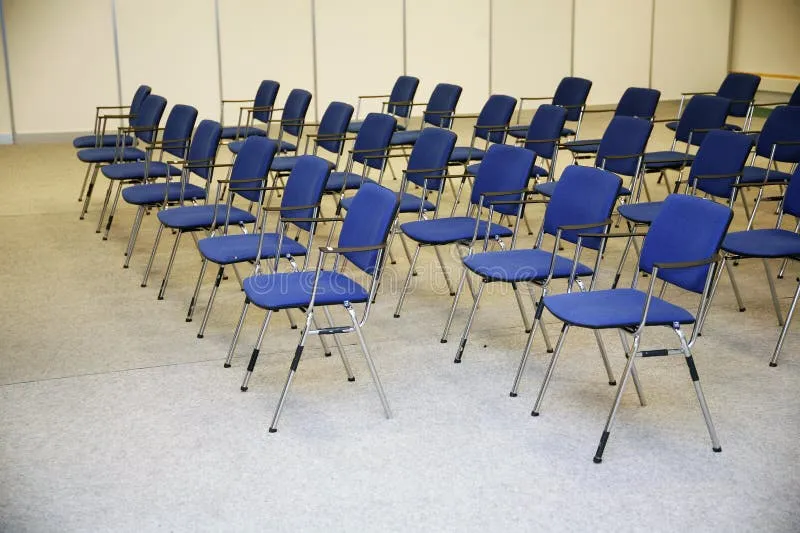
Photo: empty community meeting hall chairs nonprofit annual gathering, via thumbs.dreamstime.com
Across the United States, thousands of community organizations still convene their memberships once a year, in a rented hall or a church basement, to conduct the business required of them by their bylaws. Attendance at these gatherings tells a familiar story: a handful of committed stalwarts, a scattering of curious newcomers, and an empty room that grows emptier every January.
The annual meeting, as an institution, is not failing because members stopped caring. It is failing because it was designed for a communications environment that no longer exists — one in which a once-a-year gathering was the only practical way to share information, ratify decisions, and renew a sense of collective purpose. That constraint vanished a decade ago. The ritual, for many organizations, has not caught up.
The Stagnation Signal Nobody Wants to Send
An under-attended annual meeting does more than waste an evening. It communicates something unintended to every stakeholder who notices the headcount: that the organization is running on inertia. Funders, municipal partners, and prospective board members read low turnout as a proxy for institutional health — often unfairly, but reliably.
There is also a governance cost. When only a small fraction of members attend, the votes taken at these meetings reflect the views of the few who could arrange a Tuesday night in person. Decisions with multi-year consequences — bylaw amendments, slate elections, dues changes — are ratified by a narrow and unrepresentative slice of the membership. That is not a participation problem; it is a legitimacy problem.
Three Alternatives Worth Serious Consideration
Organizations that have moved beyond the single annual gathering tend to land on one of three models, or some combination of them.
Quarterly micro-assemblies. Rather than one long meeting, hold four short, focused sessions — thirty to forty-five minutes each — each dedicated to a single governance or programmatic question. Shorter commitments lower the barrier to attendance, and spreading business across the year produces a membership that is continuously informed rather than annually surprised.
Asynchronous voting. For matters that do not genuinely benefit from debate — routine board ratifications, minor policy updates — allow members to vote securely online over a defined window. Several states' nonprofit statutes and most model bylaws accommodate this with modest amendments. The result is broader participation and a more accurate picture of member sentiment.
Regional pop-up convenings. A national or statewide membership does not live in one zip code. Small, informal gatherings hosted in members' own communities — a library meeting room in Dayton, a coffee shop back room in Tacoma — often accomplish more relationship-building than a ballroom ever did. Formal business can be handled remotely; the pop-ups exist purely for connection.
The Keep, Merge, or Retire Checklist
Before amending bylaws or booking next year's hall, work through five questions:
- Does the meeting produce decisions that could not be made another way? If every agenda item could be handled by ballot or report, the gathering is ceremonial — which may be worth preserving, but only if acknowledged as such.
- What is the three-year attendance trend? A single weak year is noise. A steady decline is a mandate for change.
- Is attendance limited by geography or by schedule? The remedy differs: the former calls for distributed convenings, the latter for asynchronous formats.
- Do your bylaws and state law permit the alternatives? Most do, but confirm the specifics with counsel before acting.
- What would members actually choose? Ask them. A short survey on meeting format routinely produces higher response rates than the meetings themselves — which is, in itself, an answer.
If the annual meeting survives this review intact, keep it — but say honestly what it is: a tradition and a social occasion, not a governance instrument. If it does not survive, retire it deliberately, with a member communication that explains the reasoning and describes what replaces it. A meeting that ends with purpose is very different from one that simply fades.
Continuity Is the Point, Not Calendar
The organizations thriving in this hybrid era share a common trait: their members feel engaged throughout the year, not summoned once. Governance that happens continuously — through digital assemblies, distributed votes, and local gatherings — produces a membership that is harder to lose and easier to mobilize.
The annual meeting was never the mission. It was a mechanism. When a mechanism stops serving the mission, the most respectful act an organization can perform — toward its founders, its members, and its own future — is to replace it with something that works.