The Bridge Is a Job: Designing Community Liaison Roles That Last
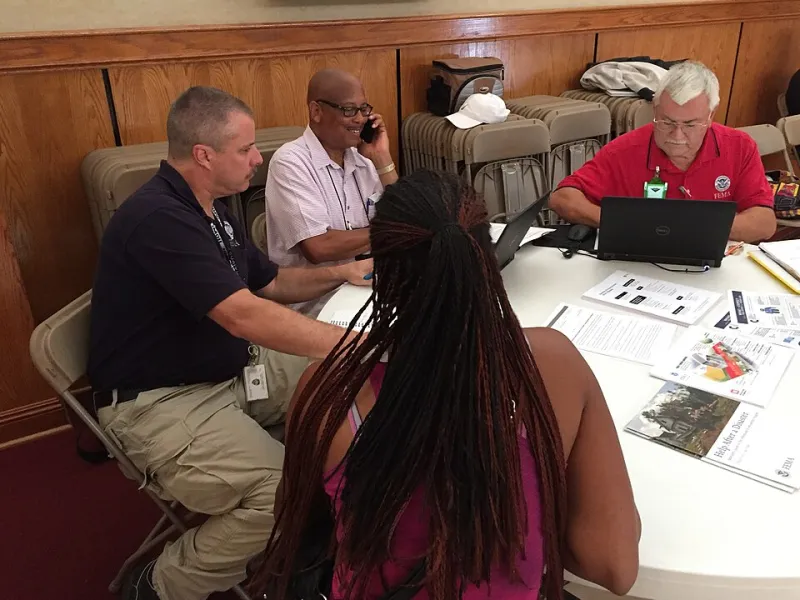
Photo: Department of Homeland Security. Federal Emergency Management Agency. Public Affairs Division. 3/1/2003, Public domain, via Wikimedia Commons
The community liaison is one of the most important roles in a neighborhood program and one of the most poorly designed. A program hires a resident to serve as a bridge—an outreach worker, navigator, or liaison—and then gives the role a title without a supervisor, a scope without boundaries, and a stipend without benefits. When the person leaves, the organization says the community was hard to reach. The more accurate explanation is that the job was never built to last.
The pattern we keep misreading
The liaison role often begins with good intentions. A program wants authentic voice, so it hires someone from the neighborhood. The person knows the block, speaks the language, and has credibility that no external recruiter can manufacture. Then the role expands. The liaison is asked to translate documents, mediate family disputes, cover the front desk, attend evening meetings, and represent the organization at city hall. None of these tasks is in the original agreement.
The liaison is also asked to carry a dual loyalty. The organization wants consistent documentation and professional boundaries. The neighborhood wants responsiveness and discretion. Without clear rules, the liaison absorbs the tension personally. Turnover follows. The organization loses institutional knowledge and concludes that hiring from the community is risky. That conclusion is both unfair and expensive.
A title is not a role
A real job has a reporting line, decision rights, and a defined scope. The liaison should report to a named supervisor who is trained to manage community-facing staff. The role should be distinguished from a caseworker, an organizer, and a communications officer. If the liaison is expected to make eligibility decisions, say so. If the liaison can promise services, say so. If the liaison cannot authorize spending or exceptions, say so.
Ambiguity is not flexibility. It is a setup for conflict. A written job description should name the primary tasks, the expected hours, the documentation requirements, and the limits of the role. It should also state what the liaison must escalate: safety concerns, legal questions, media inquiries, and requests that exceed program capacity.
Scope: three lists
The simplest scope tool is a three-column page. The first column lists what the liaison can decide alone: scheduling a community meeting, sharing approved materials, referring a resident to a known service, or ordering supplies within a small budget. The second lists what requires supervisor approval: exceptions to eligibility, public statements, spending above the cap, and sharing sensitive information. The third lists what the liaison must not do: provide legal advice, promise housing, handle cash without controls, or supervise volunteers without training.
The lists should be reviewed with the liaison, not handed down. The person doing the work will know where the ambiguities sit. Update the lists after the first ninety days and after any incident.
Pay the job as a job
A stipend is not a wage. If the liaison is expected to keep hours, attend meetings, and document work, the role should be classified and paid accordingly. That means an hourly wage or salary, overtime where applicable, payroll taxes, workers compensation, mileage, and a phone or internet stipend. Benefits should be compared with similar roles in the organization. A community voice premium is not a substitute for a living wage.
Pay transparency matters. If the liaison learns that a less experienced coordinator earns more, the bridge becomes a grievance. Conduct a pay equity review before posting the role. Pay for preparation and travel time. Do not ask the liaison to absorb the cost of community engagement.
Supervision, safety, and boundaries
Weekly supervision is not micromanagement. It is the place where the liaison can raise a difficult case, test a boundary, and get support. The supervisor should be trained in trauma-informed practice and de-escalation. The organization should have a safety protocol for home visits, after-hours contact, and hostile encounters. No liaison should be alone in an unsafe situation because the program wanted to save money.
The role also needs a confidentiality policy and a clear mandated-reporting procedure. The liaison should know what must be shared, with whom, and why. A community liaison who is seen as an extension of law enforcement will lose credibility. A liaison who is asked to keep secrets that belong in a case file will burn out. The policy must be explicit.
Advancement and exit support
The liaison role should not be a dead end. Build a career lattice: peer support, lead liaison, program coordinator, community engagement manager. Fund training in facilitation, benefits navigation, and data entry. Create a path to permanent employment for people who want it. If the role is time-limited, say so at hiring and offer transition support.
Exit support is part of the design. Conduct exit interviews. Offer a reference and a bridge to the next role. Keep an alumni network for people who want to stay connected without being on staff. Turnover is not always failure, but avoidable turnover is.
A board checklist
Before approving a liaison role, the board or leadership team should be able to answer ten questions. Who supervises the role? What decisions can the liaison make? What must be escalated? How is the role paid and classified? What safety protocol applies? How is confidentiality handled? What training is funded? What is the advancement path? How will the organization measure success? What is the exit plan?
If the answer to the first question is no one, the role is not ready. If the answer to the pay question is a stipend for full-time work, the role is not fair. Authentic partnership requires staffing the liaison role as a real job, not a symbolic bridge.